by Bill Sloat
10.12.2012
Former GOP governor from Cincy now hailed as Mr. Conservation
When Bob Taft left the governor’s office in 2007, he was
seen as little more than a pompous bumbler. His two terms ended with a
conviction on a misdemeanor ethics crime for failing to report free golf
outings. He was the epitome of a country club Republican, a patrician
who played but didn’t pay, a rajah who blamed his aides for failing to
mention on ethics filings that his greens fees were gifts. Meanwhile, a
major scandal involving rare coin investment contracts with a
well-connected supporter from Toledo was roiling the state workers’
compensation insurance fund. That crime smelled like like pay to play in
the Taft Administration. And Taft’s poll numbers were deep in the pits —
he was rated the most unpopular governor in the United States. Many
Ohioans viewed Taft as a pol who was at his best only when the going was
good. Now he’s on the road to a comeback of sorts. The
Taft years are getting a second look, and out of it emerge a different
image, that of a governor with a sensible environmental policy. For
example, who noticed that he tried to stop Asian carp from invading our
waterways nearly a decade ago — an invasion that has come true.
Next month, the state’s most important
environmental/conservation organization plans to give Taft its award for
lifetime achievement as a consistent backer of policies and programs
for clean air and water. So the governor who skipped his green fees is
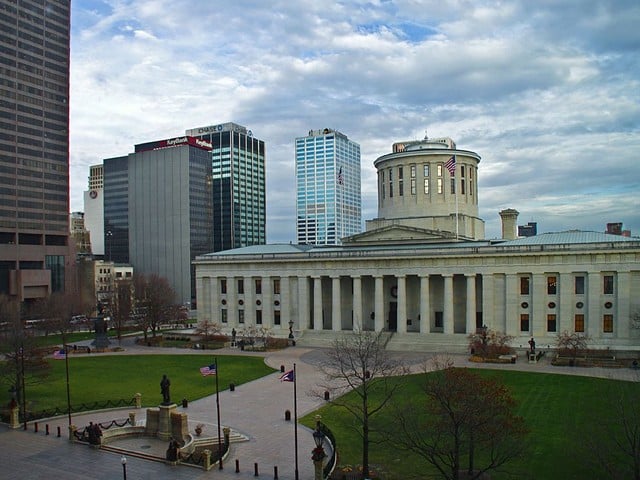
being recognized as Mr. Green. The Ohio Environmental Council says it will bestow the honor Nov. 10 at its annual “Green Gala” in Columbus.
Taft is being seen in hindsight as the kind of R who
wasn’t afraid of standing up for the environment. That is a rarity in
today’s GOP, where Rush Limbaugh routinely denounces tree-huggers as
enviro-fascists, and the EPA is widely portrayed as a jobs-killing
hydra. Of course, few remember that Republican President Richard Nixon
created the EPA. Nor do they seem to recollect that Teddy Roosevelt —
when he wasn’t hunting elephants or elk — is the patriarch of the
national park system.
Taft gets credit for taking on his own party, which recently considered tapping water from the Great Lakes. He had supported strict limits
on withdrawing water from Great Lakes feeder streams for industrial and
mining purposes — those streams replenished Lake Erie. Taft believed
the Great Lakes were resources that needed more protection from special
interests; they did not need more abuse and exploitation.
Taft also favored reauthorization of the federal Clean
Water Act, and he wanted Superfund legislation fixed to add so-called
“brown fields,” which were old industrial sites that could be cleaned
and put back into use as commercial real estate. He supported an energy
policy that would have 25 percent of all U.S. energy coming from
renewable sources by 2025. He pushed natural gas companies to set aside
funds to help low income families pay their heating bills.
As far back as 2003, Taft was urging governors and
Congress to take drastic action to stop the spread of the Asian carp,
the giant jumping fish that now are in the Ohio River near Cincinnati.
He called such invasive species “perhaps the most serious and
potentially destructive threat” to Ohio’s natural ecosystem. His warning
about all the invaders came too true. Since then, Emerald Ash Borers
have appeared and destroyed too much of Ohio’s forestland. And Asian
longhorn beetles are on the march in Clermont County, where the
Department of Natural Resources and Forest Service have drawn battle
lines against the pest. Taft worried about water pollution, too. He said
too many beaches were closed from bacteria and sewage, and he saw the
solution as “not better information about when to close the beach, it’s
not having to close the beach in the first place.”
So Taft is getting a thoughtful reappraisal. He may have
been comfortable at play on the country clubs. But his reputation is
coming back from low ebb.
Neither capitalism nor communism, new concept protects resources
1 Comment · Wednesday, May 18, 2011
The usual narrative of America’s Dust Bowl years goes something like this: Midwestern farmers, driven by greed, recklessly and ignorantly wrecked the land to such a point that it became worthless. They essentially ate themselves to death. But Raj Patel, author of "The Value of Nothing," says it wasn’t some innate, every-man-for-himself style of greed that raped the land; it was the dominant capitalist construct that was to blame.
Going meat-free offers environmental benefits across the globe
1 Comment · Thursday, April 14, 2011
Eating a diet free of animals and animal byproducts is much more than a the act of refusing to support industries or practices that devastate the environment, contribute to global hunger, or vastly disrupt the delicate balance of nature — it's an acknowledgment that we have the ability to be the change we wish to see, and that means a diet that has a much lower carbon footprint as well as a greater sense of compassion for all that live on Earth.