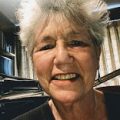
The Cincinnati Opera’s 2016 season is generating more than the usual buzz. The world premiere of Fellow Travelers already has an international following. This year’s outstanding casts include world-class singers Christine Goerke, Russell Thomas, Marcello Giordani and Gordon Hawkins. And making their long-awaited (some would say overdue) Cincinnati Opera debuts are University of Cincinnati College-Conservatory of Music faculty members Robin Guarino and Mark Gibson. Guarino directs Johann Strauss, Jr.’s comic masterpiece Die Fledermaus, and Gibson leads the musical forces for Fellow Travelers.Guarino was appointed the J. Ralph Corbett Distinguished Chair in Opera in 2008, and Gibson, who is a professor of conducting and head of CCM’s Conducting Department, has been on the faculty for 18 years. Both have led productions at major opera houses around the world, including the Met and New York City Opera, and are frequent collaborators at CCM.
So what took so long? It’s not a matter of simply asking.
“We’ve wanted to work with Robin (Guarino) since she got here,” says Evans Mirageas, artistic director of Cincinnati Opera. “Her reputation preceded her and we were looking for the right vehicle.”The next question was whether the vehicle would be an existing production or a new one, Mirageas says, because an existing production frequently includes the director who originally staged it. Two years ago, the stars aligned for everyone.
“The Jacobs School of Music at Indiana University hired Robin to stage Fledermaus last fall, and she discussed some of her ideas with me,” says Marcus Küchle, Cincinnati Opera’s director of artistic operations, who also co-directs Opera Fusion: New Works with Guarino. “It gave us an opportunity to invest in the production and to finally bring Robin in to direct.”
Mirageas was eager to present Fledermaus in a way that met his standards for the right constellation of artists and for the work itself.
“It’s the masterpiece of the operetta genre, the forerunner of the Broadway musical,” Mirageas says. “It’s a silly plot with a serious side to it, and musical genius runs throughout. Robin brings a wonderful eye that is not quite cynical but not naïve. She sees this as a comedy about adults, and the setting she and her production team chose is tremendously clever.”
Die Fledermaus is German for “the bat,” and there’s no connection to Twilight’s vampire realm. The story is a frothy comedy about deception, infidelity and revenge, whipped up into soft peaks. There’s a cheating husband, a jealous wife with a lover of her own, a maid who wants to be in showbiz and a Russian prince sung by a mezzo-soprano. The bat is Dr. Falke, who two years earlier was forced to walk home in a bat outfit he wore to a costume party after being humiliated by his friend Eisenstein.
Guarino will be the first to tell you that Fledermaus is tough to stage.
“Everyone always underestimates it,” she says. “There are scenes with crowds of people and a lot of moving parts. You have opera singers speaking, and since they’re not trained to do that, you have to help them make that transition.”
Guarino dealt with the problem by making cuts in the dialogue and adapting a singing translation from a version of the opera created by her colleague David Pountney of the Welsh National Opera.
“David gave me free rein to replace the Britishisms with American references,” Guarino says.
“I’m all about the music, which is so great,” she continues. “We tightened the script and eliminated the second and third act’s bad, self-referential jokes so we could get to the wit and buoyancy in the score.”
Working with conductor David Charles Abell, Guarino made further cuts, including eliminating the jailer Frosch, whose character morphs into the role of Frank, the concierge.
Guarino admits that she and Mirageas came up with a Cincinnati reference, but she won’t reveal what it is. That’s just one of many promised surprises.
“It’s all about revenge,” Guarino says. “That’s the force that drives the comedy, and everyone’s in on it.”
She and acclaimed scenic designer Allen Moyer based their setting on Wes Anderson’s film The Grand Budapest Hotel, which was inspired by Viennese writer Stefan Zweig’s short story collection The Society of the Crossed Keys. There’s an elevator whose doors open to reveal an amorous couple, a hotel concierge who can do anything for anyone and hotel staff and guests delighted to play their parts in carrying out Dr. Falke’s revenge extravaganza. The Aronoff stage is smaller than the stage on which Guarino originally worked at Indiana University, but adjustments present no problems, according to Guarino and Mirageas.
Although Guarino has worked with many of the cast members, this will be her first time directing the two leads portraying Rosalinde and her philandering husband Eisenstein, soprano Nicole Cabell and baritone Zach Borichevsky, respectively.
As much as she looks forward to working with these singers, Guarino is especially pleased that CCM students will be in the chorus and singing smaller roles.
“It makes my job easier because they’re so well-trained,” she says. “I’ve worked with many of them, and we have a great rapport.”
Conductor Mark Gibson has an equally solid rapport with Fellow Travelers, based on Thomas Mallon’s 2007 novel about the repressive measures against gay and lesbian government workers during the McCarthy era, known as the Lavender Scare. Gibson has worked with the opera’s composer Gregory Spears since the work was first presented as part of Opera Fusion: New Works in 2013.
Gibson leads the Philharmonia, CCM’s top-tier orchestra that also supports both opera and musical theater productions. Mirageas says Gibson was clearly the right person to conduct the world-premiere performances of Fellow Travelers, which will be staged in the Aronoff’s smaller Jarson-Kaplan Theater beginning June 17.
“He was with the project from the beginning, and he was very helpful to the composer,” Mirageas says. “Greg Spears asked as many questions of him as Mark (Gibson) asked Greg!”
With more than three decades of experience conducting opera throughout the world, Gibson has high praise for the score, especially for the vocal writing.
“Greg brought it in 80 percent completed, and the shape of the piece has remained the same,” Gibson says.
Following the Opera Fusion workshop, composer Spears rewrote several scenes, even changing a role’s vocal range.
“Greg’s music is transparent enough to communicate the text,” Gibson says. “The pace creates a cumulative effect, and the momentum is non-stop.”
Gibson calls the final scene “gut-wrenching,” the culmination of music that humanizes the characters, their complicated love relationships and their decisions. He also credits Greg Pierce’s libretto for creating characters and situations that transcend the setting of the early 1950s. “You have to relate to the characters,” Gibson says. “And these are people we see every day making choices we can all understand.”
Fellow Travelers also marks conductor Gibson’s Cincinnati Symphony Orchestra debut, and he’ll work with a 17-piece ensemble including strings, piano, oboe, flute and two trombones. “It doesn’t need more than that,” he says.
An advantage for any conductor working with a new piece is that there’s no precedent with which to compare the work. But Gibson’s extensive background in opera and symphonic conducting are invaluable resources in the rehearsal room. Both Mirageas and the opera’s director of artistic operations Küchle regard Gibson’s work with performers as first-rate.
“He’s one of the most nurturing maestros working with young singers that I’ve come across,” Mirageas says. “He has a deep knowledge of operatic repertory and he asks all the right questions.”
In March, selections from Fellow Travelers were performed in Brooklyn, N.Y. at National Sawdust, the borough’s hottest new venue.
“Mark had one rehearsal to prepare 45 minutes of music, and except for one person, everybody else was new — and this was the evening before the performance,” says Küchle, who provided the piano accompaniment. “It was a wonderful experience, and how well that went is further proof of how excellent Mark’s work is.”
CCM students will tell you that Gibson is a tough taskmaster, but Mirageas counters, “He’s tough but fair. He always asks the right questions, and he always lets the singers know that he’s there for them.”
Guarino adds, “Once they’re out in the real world, what they’ll hear will be a lot harsher than anything Mark says!”
Fellow Traveler’s cast includes CCM alums Joseph Lattanzi and Talya Lieberman, both of whom Gibson has worked with. This may be Guarino and Gibson’s first time on the Cincinnati Opera roster, but CCM has been a consistent presence.
Opera Fusion: New Works is a collaboration between CCM and the Cincinnati Opera, now in its fifth year with support from the Mellon Foundation. CCM students perform in the Opera’s chorus each season and have small roles; faculty members Ken Shaw and Bill McGraw have sung supporting roles; and many of the CCM coaching staff are on the Cincinnati Opera summer staff.
There are obvious advantages for both organizations — it’s a unique partnership that benefits each group.
“We’re all about collaboration,” Mirageas says. “For an opera company not to embrace a superb educational institution in its backyard is simply stupid. We also have a program with (the School for Creative and Performing Arts). The young learn from us and we learn so much from them.”
“We can take talent that’s already in Cincinnati and have a major impact on developing people as artists who will go out to professional careers,” Küchle says. “We can also provide the creative outlet for faculty, too, giving them opportunities to work their performance muscles, and that inspires their students.”
“We know Cincinnati Opera from our collaborations, but this is something new,” Guarino says. “It’s about our individual work. And, of course, I’d like to be asked back.”
Though the timing worked out this time, Guarino already has gigs lined up with Opera Theatre of St. Louis for next summer and beyond, and Gibson has conducting commitments in China.
But, depending on the project, their paths could cross again. And there’s every indication that projects will come through, in part through Opera Fusion, but also simply because when the home teams are this good, everybody stands to win.
CINCINNATI OPERA 2016 SEASON
Die Fledermaus • June 16 and 18 • 7:30 p.m.
Aronoff Center for the Arts • Procter & Gamble Hall
Music by Johann Strauss, Jr.
Libretto by Carl Haffner and Richard Genée Fellow Travelers • June 17, 21, 23, 25, 28 and 30;
July 6 and 8 • 7:30 p.m. // June 19 and July 10 • 3 p.m.
Aronoff Center for the Arts • Jarson-Kaplan Theater
Music by Gregory Spears
Libretto by Greg Pierce
Based on the novel by Thomas Mallon Opera in the Park • June 26 • 7 p.m.
A free outdoor concert in Washington Park featuring a selection of opera and musical theater favorites performed by stars of the Cincinnati Opera 2016 season, the Cincinnati Opera Chorus and the Cincinnati Symphony Orchestra. Fidelio • July 7 and 9 • 7:30 p.m.
Aronoff Center for the Arts • Procter & Gamble Hall
Music by Ludwig van Beethoven
Libretto by Joseph SonnleithnerTosca • July 23, 27 and 29 • 7:30 p.m.
Aronoff Center for the Arts • Procter & Gamble Hall
Music by Giacomo Puccini
Libretto by Giuseppe Giacosa and Luigi Illica
Cincinnati Opera will perform DIE FLEDERMAUS 7:30 p.m. June 16 and 18. FELLOW TRAVELERS begins June 17. Tickets and more info: cincinnatiopera.org.
This article appears in Jun 8-15, 2016.